Notes on Alaska
A place of powerful heritage, wilderness, and wildness
On a family cruise vacation in southeast Alaska’s Inside Passage earlier this month, I learned that bald eagles nearly outnumber people in Juneau, a place with roughly 32,000 human residents. We saw so many eagles during a bus ride to a whale-watching excursion that they became commonplace in fewer than twenty minutes: there’s one on the light pole on our left! There, one perched in the tree at our three-o’clock. Another one, atop the sign post; another standing on the fence. They appeared throughout the drive, offering a quick lesson in scarcity—or the absence thereof—relative to our perception of a thing’s value. How quickly we lose appreciation for something (or someone) we see all the time.
It was also a telling feature of a place unlike any I’d visited before, where the exceptional seems ordinary, heritage is paramount, and everyday necessities can be scarce.
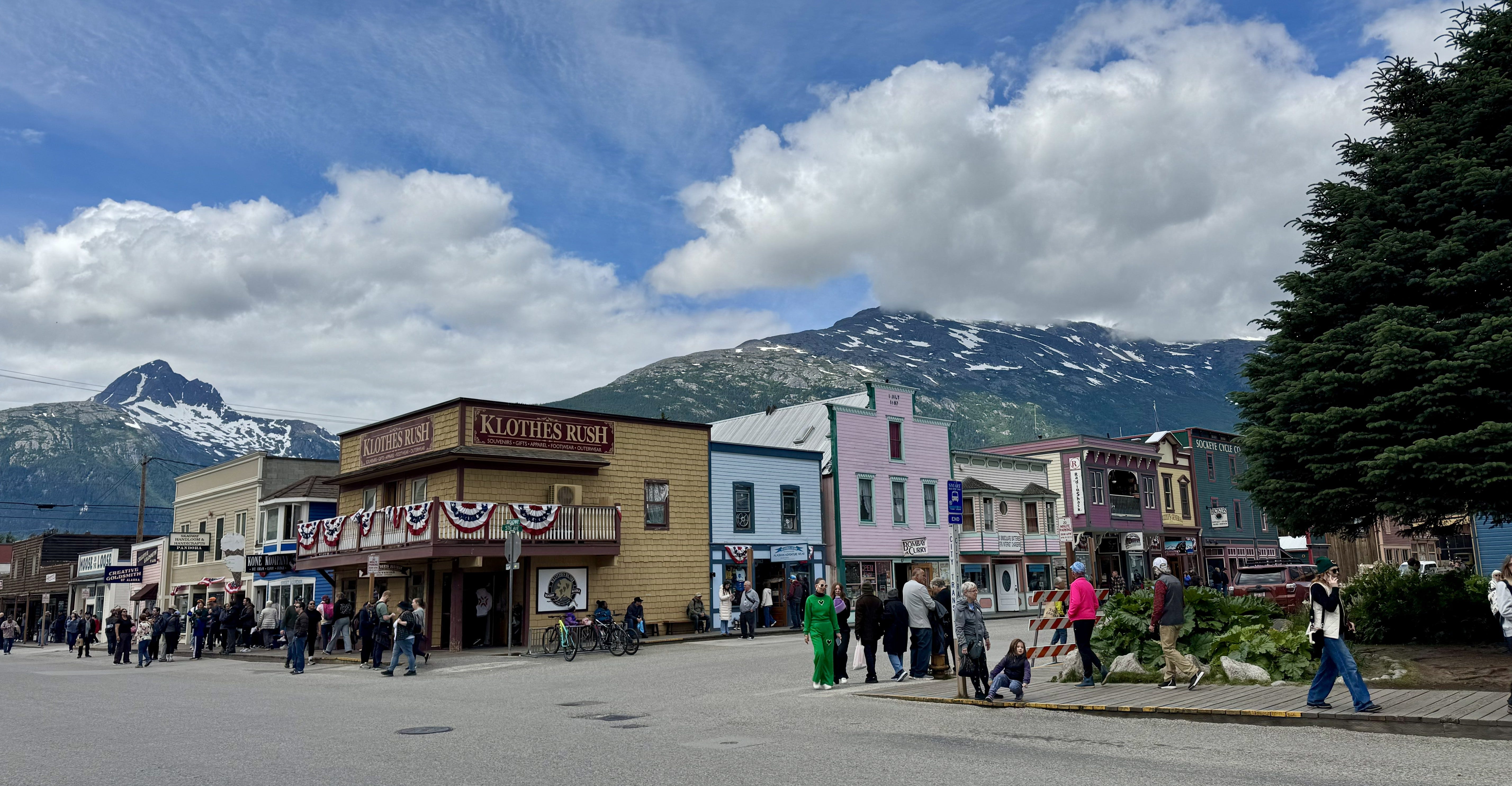
Our first stop on the cruise, Skagway, was an important destination during the Klondike gold rush after gold was discovered in the Yukon territory in 1896. The charming town evokes frontier days and the wild west, with museums and touches of Americana among the colorful, historic buildings.
Ours was not the only cruise ship debarking there, and the town quickly filled with cruise-goers in a way I found oddly disturbing. I was one of those cruise-goers, so I also felt slightly guilty, and wondered what the residents felt about the onslaught of tourists that must take place constantly over the summer. Tourism is clearly an economic driver for the town, so I imagined a contradicting sense of gratitude and resentment; but I don’t really know. Certainly I felt grateful to be there, in such a unique place rich with history and set against the striking Sawtooth mountain range.
The town’s historic roots stretch back long before the gold rush, and I saw in many places (like the Skagway Cultural Garden) an honoring of Alaska Native culture and heritage. The Tlingit people have inhabited Alaska since at least 10,000 BCE, an immense and staggering timeline to most of us, and many Alaskans can trace their lineage to these and other Native peoples. History in Skagway, and elsewhere in Alaska, felt not like a touristic show but a deeply meaningful omnipresence, the original values and traditions of which live on.
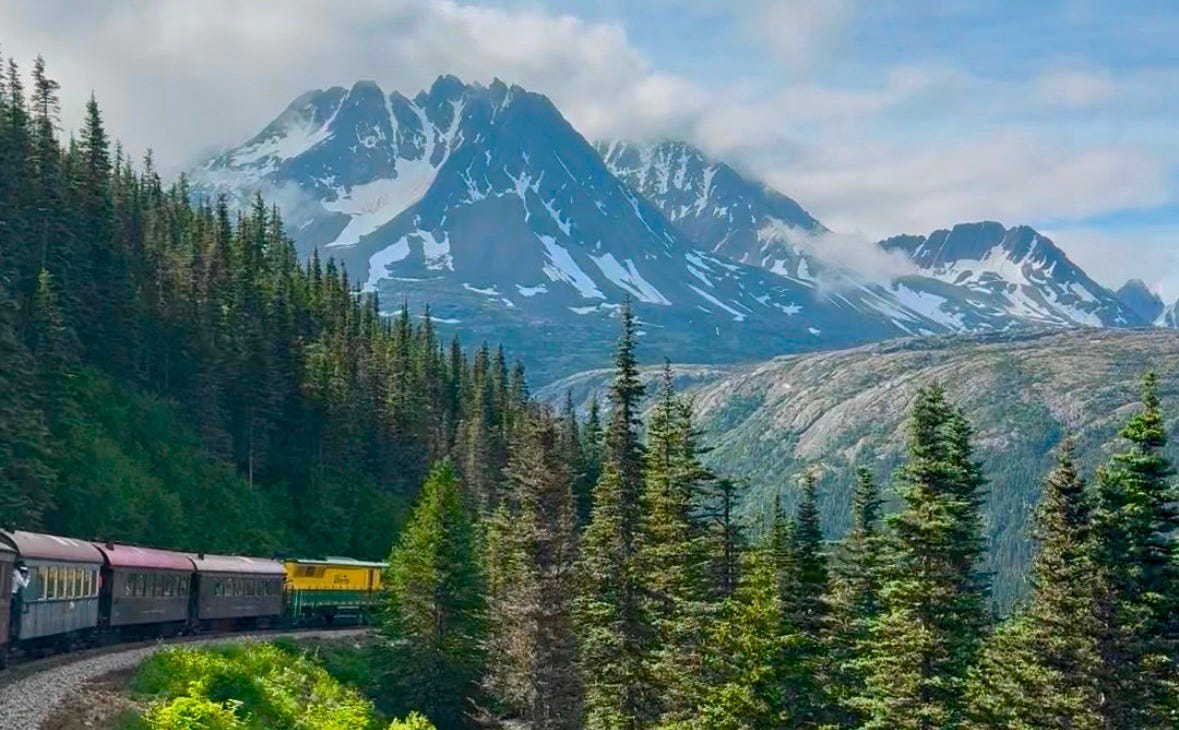
It was the Native residents of Skagway who discovered the nutritional benefits of Sitka spruce tips, the bright-green ends of Sitka spruce pine needles, long before the gold miners learned to take the tea to cure their scurvy. I learned this bit of trivia on the beautiful White Pass and Yukon Route scenic railway; later, at the Skagway Brewing Company, we were excited to sample the Spruce Tip Blonde ale. Apparently the miners had quickly moved on from making tea to brewing beer with the spruce tips all those years ago.
Our next stop on the cruise was Juneau, the capital of Alaska. I was expecting a bigger town here, but especially bigger was the vibe of tourism frenzy. More cruise ships were docked; more cruisers descended upon the town, this time welcomed by shop workers calling out, not subtly, “Spend money with us!” Dozens of jewelry stores, seafood restaurants, and souvenir shops competed for business with signage reminiscent of Vegas. I wondered where we might find a local feeling, somewhere less trodden, less garish, more peaceful.
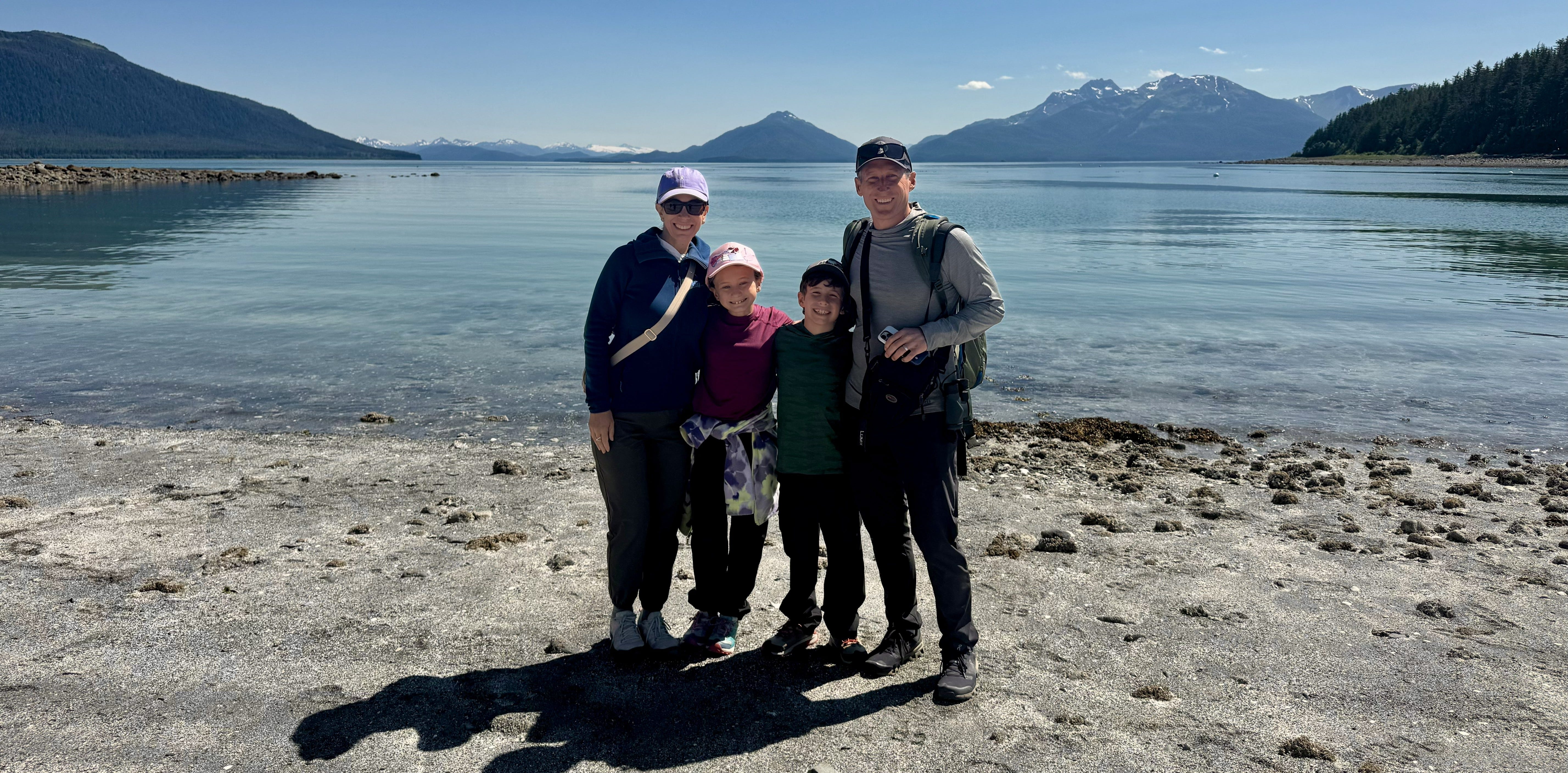
We found it, ironically, on the whale-watching excursion that took us to Orca Point Lodge. Along the way, our hopes of seeing whales were realized as groups of humpbacks spouted and surfaced, occasionally diving to show off a stunning, singular tail. Bald eagles flew overhead while the backdrop of snowy peaks made the scene even more thrilling. Our guides explained the essential etiquette of whale-watching boats, which includes a limit of thirty minutes to observe a given whale pod, after which we moved on. I appreciated the respect demonstrated for these peaceful creatures, and the interplay of human-animal relationships in what felt like a mutual understanding.
On the boat, a guide mentioned that many Juneau residents have taken to subsistence hunting to supplement purchased food and goods, as items become ever-increasingly expensive to buy in Alaska. Juneau, like other locales in southeast Alaska, is only accessible by air or by water, and we saw countless containers at port with goods shipped from the Pacific Northwest and elsewhere. Nearly everything Alaskans purchase is imported from outside of the state.
At the beautiful Orca Point Lodge on Colt Island, we ate my favorite meal of the trip, highlighting local flavors, and enjoyed the stunning scenery from the shore below.
After Juneau, we docked in Ketchikan, an island community known as “the Salmon capital of the world.” It was a fishing settlement for the Tlingit and other Native peoples, and today a sixth of the population there is of Native descent. Ketchikan also has the world’s largest collection of standing totem poles, with sites including Totem Bight State Historical Park and the Totem Heritage Center.
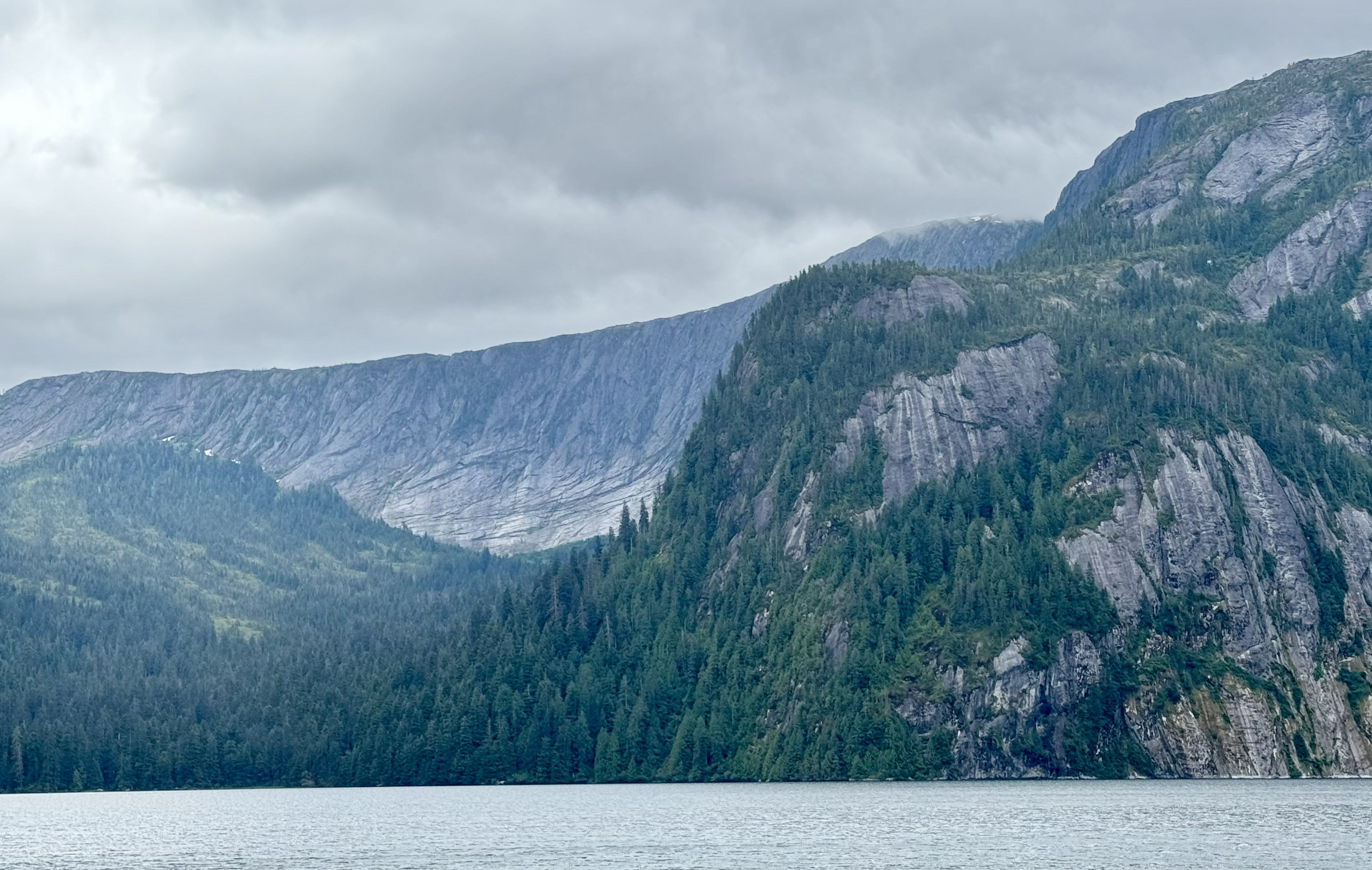
Like our other destinations in southeast Alaska, Ketchikan is situated within the Tongass National Forest, the largest national forest in the United States and the largest contiguous temperate rainforest in the world. (Ketchikan averages about 165 inches of rain per year.) From this stop, we took a long catamaran ride to see the Misty Fjords National Monument, a stunning collection of glacier-carved cliffs and rock formations. Along the way we saw New Eddystone Rock, a basalt pillar and the remnant of a volcanic eruption nearly 15,000 years ago. The ancient nature of the geography and geology here was difficult to comprehend.
Leaving Alaska, I found the impression it made on me deepening and begging for further exploration. It had always been a “bucket list” destination of mine, with its natural landscape and wildlife, as well as some intangible wildness I had yet to identify. Now, having traveled within a tiny part of the state, I feel a greater sense of awe and admiration for the land’s beauty and history, along with a new sense of the challenges people undertake to make it their home.
Bonus reading: if you haven’t yet, check out The Great Alone by Kristin Hannah. The novel centers on a family living off the grid in the Alaskan wilderness. Hannah drew on experiences within her own family to create the story; I found it a fascinating and powerful read.